Côte-d’Or
Côte-d'Or is a department in Bourgogne-Franche-Comté in the heart of Burgundy, rich in history and heritage. It is known for its Romanesque and Gothic art, and its cuisine and lifestyle.| Tap on a place to explore it |
Photo: Christophe.Finot, CC BY-SA 2.5.
Photo: NemesisIII, CC BY-SA 3.0.
Essential Destinations
Top destinations include Dijon and Beaune.
Dijon

Photo: François de Dijon, CC BY-SA 3.0.
Dijon is the largest city in the eastern French region of Bourgogne-Franche-Comté. Dijon is best known for its mustard, which is no longer produced in its metropolitan area.
Beaune

Photo: Velvet, CC BY-SA 3.0.
Beaune is a city in the Côte-d'Or department in Bourgogne-Franche-Comté, France. Beaune has much to recommend as it is a bustling, wealthy, and charming place of pilgrimage for art lovers, wine lovers, and gastronomes.
Semur-en-Auxois

Photo: Patrick89, CC BY-SA 3.0.
Semur-en-Auxois is a medieval town in the heart of the Côte-d'Or department in Bourgogne-Franche-Comté, on the banks of the Armançon. Semur was once a fortified town, and though the castle has now been mostly dismantled, the tall towers and main wall still remain and surround the inner part of the town.
Destinations to Discover
Explore places such as Châtillon-sur-Seine and Aiserey.
Châtillon-sur-Seine

Photo: Claude PIARD, CC BY-SA 4.0.
Châtillon-sur-Seine is in the Côte-d'Or department in Bourgogne-Franche-Comté. Châtillon has the label ville fleurie at the "two flowers" level. It has also been named one of the "most beautiful detours in France".
Aiserey
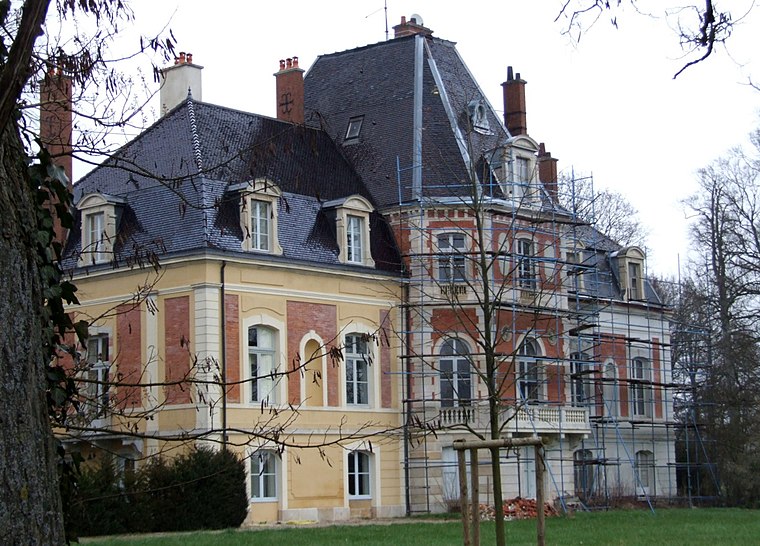
Photo: Christophe.Finot, CC BY-SA 2.5.
Aiserey is a town in the Côte-d'Or department in Bourgogne-Franche-Comté.
Saulieu

Photo: PMRMaeyaert, CC BY-SA 3.0.
Saulieu is a small town in the Côte-d'Or department in Bourgogne-Franche-Comté, a region of France which is southeast of Paris and north of Lyon.
Époisses

Photo: Christophe.Finot, CC BY-SA 2.5.
Époisses is a small village in the Côte-d'Or department in Bourgogne-Franche-Comté. It is famous for its eponymous cheese.
Forêts National Park

Photo: Pmau, CC BY-SA 4.0.
Forêts National Park is a French national park located in the northeastern part of metropolitan France, not far from Dijon to the south. It protects the broad-leaved trees typical of the southeastern Paris Basin plateau.
Côte-d’Or
- Type: department of France with 538,000 residents
- Description: French department
- Also known as: “Cote-d’Or”
- Neighbors: Nièvre, Saône-et-Loire, and Yonne
- Location: Bourgogne-Franche-Comté, France, Europe
Population
538,000Wikidata ID
Q3342
This page is based on Wikidata, Wikimedia Commons, and Wikivoyage.
We’d love your help improving our open data sources. Thank you for contributing.
In Other Languages
From Afrikaans to Zeeuws—“Côte-d’Or” goes by many names.
- Afrikaans: “Côte-d’Or”
- Albanian: “Côte-d’Or”
- Arabic: “Côte-d’Or”
- Arabic: “كوت دور”
- Aragonese: “Costa d’Oro”
- Armenian: “Côte-d’Or”
- Armenian: “Կոտ դ’Օր”
- Arpitan: “Couta-d’Or”
- Asturian: “Cote-d’Or”
- Asturian: “Côte-d’Or”
- Azerbaijani: “Kot-d’Or”
- Basque: “Côte-d’Or”
- Bavarian: “Côte-d’Or”
- Bavarian: “Département Côte-d’Or”
- Belarusian: “дэпартамент Кот-д’Ор”
- Belarusian: “Кот-д’Ор”
- Bengali: “Côte-d’Or”
- Bengali: “কোট-ডী‘অর”
- Breton: “Côte-d’Or”
- Bulgarian: “Кот д’Ор”
- Catalan: “Costa d’Or”
- Cebuano: “Côte-d’Or”
- Chechen: “Кот-д’ОгӀ”
- Chinese: “Côte-d’Or”
- Chinese: “Côte-d′Or”
- Chinese: “科多尔省”
- Chinese: “科多爾省”
- Chinese: “黃金丘”
- Chuvash: “Кот-д’Ор”
- Corsican: “Côte-d’Or”
- Czech: “Côte-d’Or”
- Danish: “Côte-d’Or”
- Dutch: “Cote-d’Or”
- Dutch: “Côte-d’Or”
- Egyptian Arabic: “كوت دور”
- Esperanto: “Bordo Ora”
- Esperanto: “Côte-d’Or”
- Estonian: “Côte-d’Ori departemang”
- Estonian: “Côte-d’Ori”
- Finnish: “Côte-d’Or”
- French: “Côte-d’Or”
- French: “département de la Côte-d’Or”
- Galician: “Côte-d’Or”
- Georgian: “კოტ-დ’ორი”
- German: “Côte-d’Or”
- German: “Département Côte-d’Or”
- Greek: “Κοτ-ντ’Ορ”
- Gujarati: “Côte-d’Or”
- Gujarati: “કોટ-ડી‘ઓર”
- Hakka Chinese: “Côte-d’Or-sén”
- Hakka Chinese: “Côte-d′Or-sén”
- Hebrew: “Côte-d’Or”
- Hebrew: “קוט ד’ור”
- Hindi: “Côte-d’Or”
- Hindi: “कोटे-डीओर”
- Hungarian: “Côte-d’Or”
- Icelandic: “Côte-d’Or”
- Ido: “Côte-d’Or”
- Indonesian: “Côte-d’Or”
- Interlingua: “Côte-d’Or”
- Interlingua: “Departimento Cote-d’Or”
- Irish: “Côte-d’Or”
- Italian: “Côte-d’Or”
- Japanese: “Côte-d’Or”
- Japanese: “コート=ドール県”
- Javanese: “Côte-d’Or”
- Kannada: “Côte-d’Or”
- Kannada: “ಕೋಟ್-ಡಿ‘ಒರ್”
- Kazakh: “Кот-д’Ор”
- Kongo: “Côte-d’Or”
- Korean: “Côte-d’Or”
- Korean: “코트도르주”
- Ladin: “Côte-d’Or”
- Ladino: “Côte d’Or”
- Ladino: “Côte-d’Or”
- Latin: “Clivus Aureus”
- Latin: “Collis Aureus”
- Latin: “Côte-d’Or”
- Latvian: “Kotdora”
- Limburgan: “Côte-d’Or”
- Lithuanian: “Kot d’Oras”
- Lithuanian: “Kot-d’Oras”
- Lombard: “Côte-d’Or”
- Low German: “Côte-d’Or”
- Low German: “Département Côte-d’Or”
- Luxembourgish: “Côte-d’Or”
- Luxembourgish: “Departement Côte-d’Or”
- Macedonian: “Златен Брег”
- Macedonian: “Кот-д’Ор”
- Malagasy: “Côte-d’Or”
- Malay: “Côte-d’Or”
- Marathi: “कोत-द’ओर”
- Min Nan Chinese: “Côte-d’Or”
- Min Nan Chinese: “Côte-d′Or”
- Northern Frisian: “Côte-d’Or”
- Northern Sami: “Côte-d’Or”
- Norwegian Bokmål: “Côte-d’Or”
- Norwegian Nynorsk: “Côte-d’Or”
- Norwegian: “Côte-d’Or”
- Occitan (post 1500): “Còsta d’Aur”
- Ossetian: “Кот-д’Ор”
- Pampanga: “Côte-d’Or”
- Persian: “کوت دور”
- Persian: “کوت-دور”
- Piemontese: “Còsta d’Òr”
- Piemontese: “Còsta-d’Òr”
- Piemontese: “Dipartiment ëd la Còsta d’Òr”
- Polish: “Côte-d’Or”
- Portuguese: “Côte-d’Or”
- Romanian: “Côte-d’Or”
- Romanian: “departamentul Côte-d’Or”
- Russian: “Côte-d’Or”
- Russian: “Кот-д’Ор”
- Scots: “Côte-d’Or”
- Scottish Gaelic: “Côte-d’Or”
- Serbian: “Côte-d’Or”
- Serbian: “Златна обала”
- Serbo-Croatian: “Côte-d’Or”
- Sinhala: “Côte-d’Or”
- Sinhala: “කෝටේ -ඩිඕර්”
- Slovak: “Côte-d’Or”
- Slovenian: “Côte-d’Or”
- Spanish: “Côte-d’Or”
- Swahili: “Côte-d’Or”
- Swedish: “Côte-d’Or”
- Swiss German: “Côte-d’Or”
- Swiss German: “Département Côte-d’Or”
- Tajik: “Департаменти Кот д’Ор”
- Tajik: “Департаменти Кот-д’Ор”
- Tajik: “Кот д’Ор”
- Tajik: “Кот-д’Ор”
- Tamil: “Côte-d’Or”
- Tamil: “கோட்-டி ‘ஓர்”
- Telugu: “Côte-d’Or”
- Telugu: “కోటె-డిఓర్”
- Thai: “Côte-d’Or”
- Thai: “จังหวัดโกต-ดอร์”
- Tosk Albanian: “Département Côte-d’Or”
- Turkish: “Côte-d’Or”
- Ukrainian: “Кот д’Ор”
- Ukrainian: “Кот-д’Ор”
- Urdu: “Côte-d’Or”
- Urdu: “کوت دور”
- Venetian: “Côte-d’Or”
- Vietnamese: “Côte-d’Or”
- Vlaams: “Côte-d’Or”
- Volapük: “Côte-d’Or”
- Waray (Philippines): “Côte-d’Or”
- Welsh: “Côte-d’Or”
- Western Armenian: “Քոթ տ’Օր”
- Western Frisian: “Côte-d‘’Or”
- Western Frisian: “Côte-d’Or”
- Western Panjabi: “Côte-d’Or”
- Western Panjabi: “ضلع کوٹے ڈی اور”
- Wu Chinese: “科多尔省”
- Yue Chinese: “Côte-d’Or”
- Yue Chinese: “Côte-d′Or”
- Yue Chinese: “黃金丘”
- Zeeuws: “Côte-d’Or”
Bourgogne-Franche-Comté: Must-Visit Destinations
Delve into Nièvre, Besançon, Vesoul, and Auxerre.
Explore These Curated Destinations
Discover places selected for their distinct character and enduring appeal.
About Mapcarta. Text is available under the CC BY-SA 4.0 license, except for photos, directions, and the map. Description text is based on the Wikivoyage page “Côte-d’Or”. Photo: NemesisIII, CC BY-SA 3.0.