Deux-Sèvres
Deux-Sèvres is a département in the Nouvelle-Aquitaine region of western France. A delightful and peaceful little department of France, Deux-Sevres has still has much to offer in the way of history, culture, culinary delights and pleasant pastoral surroundings.| Tap on a place to explore it |
Photo: Selbymay, CC BY-SA 3.0.
Photo: Père Igor, CC BY-SA 3.0.
Essential Destinations
Top destinations include Niort and Thouars.
Niort

Photo: Jfpnt, CC BY-SA 3.0.
Niort is a commune in the Deux-Sèvres department, western France. It is the prefecture of Deux-Sèvres. The population of Niort is 58,707 and more than 177,000 people live in the urban area.
Thouars

Photo: Wikimedia, CC BY-SA 3.0.
Thouars is a commune in the Deux-Sèvres department in western France. On 1 January 2019, the former communes Mauzé-Thouarsais, Missé and Sainte-Radegonde were merged into Thouars.
Places of Interest
Highlights include Église Saint-Barnabé de Mazières-en-Gâtine and Église Saint-Pardoux de Saint-Pardoux.
Église Saint-Barnabé de Mazières-en-Gâtine
Church

Photo: Domirance, CC BY-SA 4.0.
Église Saint-Barnabé de Mazières-en-Gâtine is a church.
Église Saint-Pardoux de Saint-Pardoux
Church
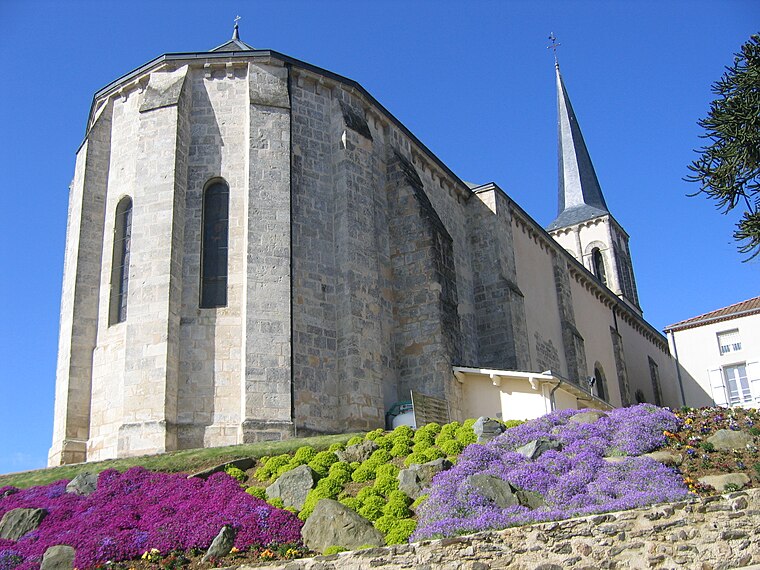
Photo: Mairiestpardoux79, CC BY-SA 4.0.
Église Saint-Pardoux de Saint-Pardoux is a church.
Église Saint-Martin de Soutiers
Church

Photo: Domirance, CC BY-SA 4.0.
Église Saint-Martin de Soutiers is a church.
Deux-Sèvres
- Type: department of France with 375,000 residents
- Description: French department
- Also known as: “Département des Deux-Sèvres” and “Deux-Sevres”
- Neighbors: Charente, Charente-Maritime, and Vienne
- Location: Nouvelle-Aquitaine, France, Europe
- View on OpenStreetMap
This page is based on GeoNames, Wikidata, Wikimedia Commons, and Wikivoyage.
We’d love your help improving our open data sources. Thank you for contributing.
Satellite Map
Discover Deux-Sèvres from above in high-definition satellite imagery.
In Other Languages
From Afrikaans to Yue Chinese—“Deux-Sèvres” goes by many names.
- Afrikaans: “Deux-Sèvres”
- Albanian: “Deux-Sèvres”
- Arabic: “دو سيفر (اقليم فرنسي)”
- Arabic: “دو سيفر”
- Aragonese: “Deux-Sèvres”
- Armenian: “Դյու-Սևր”
- Arpitan: “Doves-Sévres”
- Azerbaijani: “Dö-Sevr”
- Basque: “Deux-Sèvres”
- Bavarian: “Département Deux-Sèvres”
- Belarusian: “Дзё-Сеўр”
- Belarusian: “Дэ-Сэўр”
- Belarusian: “дэпартамент Дзё-Сеўр”
- Bengali: “দো-সেভ্র”
- Breton: “Deux-Sèvres”
- Bulgarian: “Дьо Севър”
- Catalan: “Deux-Sèvres”
- Cebuano: “Deux-Sèvres”
- Chechen: “Де-Севр”
- Chechen: “Доь-СевгӀ”
- Chinese: “Deux-Sèvres”
- Chinese: “德塞夫勒”
- Chinese: “德塞夫勒省”
- Chuvash: “Дё-Севр”
- Czech: “Deux-Sèvres”
- Danish: “Deux-Sèvres”
- Dutch: “Deux-Sevres”
- Dutch: “Deux-Sèvres”
- Egyptian Arabic: “دو سيڤر”
- Esperanto: “Deux-Sèvres”
- Estonian: “Deux-Sèvres”
- Estonian: “Deux-Sèvresi departemang”
- Finnish: “Deux-Sèvres”
- French: “Deux Sèvres”
- French: “Deux-Sèvres”
- Galician: “Deux-Sèvres”
- Georgian: “დე-სევრი”
- German: “Département Deux-Sèvres”
- German: “Deux-Sèvres”
- German: “FR-79”
- Greek: “Ντε-Σεβρ”
- Gujarati: “ડ્યુક્સ-સેવ્રેસ”
- Hakka Chinese: “Deux-Sèvres”
- Hebrew: “דה-סוור”
- Hindi: “ड्यू-सेवरेस”
- Hungarian: “Deux-Sèvres”
- Indonesian: “Deux-Sèvres”
- Interlingua: “Departimento Deux-Sevres”
- Irish: “Deux-Sèvres”
- Italian: “Deux-Sèvres”
- Japanese: “ドゥー=セーヴル県”
- Kannada: “ಡಿಯಕ್ಸ್-ಸೆವೆರೆಸ್”
- Kazakh: “Де-Севр”
- Kongo: “Deux-Sèvres”
- Korean: “되세브르주”
- Ladin: “Deux-Sèvres”
- Ladino: “Deux Sèvres”
- Latin: “Separae Ambae”
- Latin: “Utraque Separis”
- Latvian: “Desevra”
- Limburgan: “Deux-Sèvres”
- Lithuanian: “De Sevras”
- Lombard: “Deux-Sèvres”
- Low German: “Deux-Sèvres”
- Luxembourgish: “Departement Deux-Sèvres”
- Macedonian: “Де Севр”
- Malagasy: “Deux-Sèvres”
- Malay: “Deux-Sèvres”
- Marathi: “द्यू-सेव्र”
- Min Nan Chinese: “Deux-Sèvres”
- Northern Frisian: “Deux-Sèvres”
- Northern Sami: “Deux-Sèvres”
- Norwegian Bokmål: “Deux-Sèvres”
- Norwegian Nynorsk: “Deux-Sèvres”
- Norwegian: “Deux-Sèvres”
- Occitan (post 1500): “Doas Sèvras”
- Ossetian: “Дё-Севр”
- Pampanga: “Deux-Sèvres”
- Persian: “دو سور”
- Persian: “دو-سور”
- Piemontese: “Dipartiment ëd le Deux-Sèvres”
- Polish: “Deux-Sèvres”
- Portuguese: “Deux-Sèvres”
- Romanian: “departamentul Deux-Sèvres”
- Romanian: “Deux-Sèvres”
- Russian: “Дё-Севр”
- Scots: “Deux-Sèvres”
- Scottish Gaelic: “Deux-Sèvres”
- Serbian: “Де Севр”
- Serbo-Croatian: “Deux-Sèvres”
- Sinhala: “ඩියුක්ස්- සෙව්රෙස්”
- Slovak: “Deux-Sèvres”
- Slovenian: “Deux-Sèvres”
- Spanish: “Deux Sèvres”
- Spanish: “Deux-Sevres”
- Spanish: “Deux-Sèvres”
- Swahili: “Deux-Sèvres”
- Swedish: “Deux-Sèvres”
- Tajik: “Департаменти Дё Севр”
- Tamil: “டெஸ்-செவரெஸ்”
- Telugu: “డ్యూక్స్-సెవ్రెస్”
- Thai: “จังหวัดเดอ-แซฟวร์”
- Tosk Albanian: “Département Deux-Sèvres”
- Turkish: “Deux-Sèvres”
- Ukrainian: “Де-Севр”
- Urdu: “ڈو-سیور”
- Venetian: “Deux-Sèvres”
- Vietnamese: “Deux-Sèvres”
- Vlaams: “Deux-Sèvres”
- Volapük: “Deux-Sèvres”
- Waray (Philippines): “Deux-Sèvres”
- Welsh: “Deux-Sèvres”
- Western Frisian: “Deux-Sèvres”
- Western Panjabi: “ضلع دو سورے”
- Wu Chinese: “德塞夫勒省”
- Yue Chinese: “德塞夫勒”
Nouvelle-Aquitaine: Must-Visit Destinations
Delve into Bordeaux, Charente, Poitiers, and Limoges.
Explore These Curated Destinations
Discover places selected for their distinct character and enduring appeal.
About Mapcarta. Text is available under the CC BY-SA 4.0 license, except for photos, directions, and the map. Description text is based on the Wikivoyage page “Deux-Sèvres”. Photo: Père Igor, CC BY-SA 3.0.